

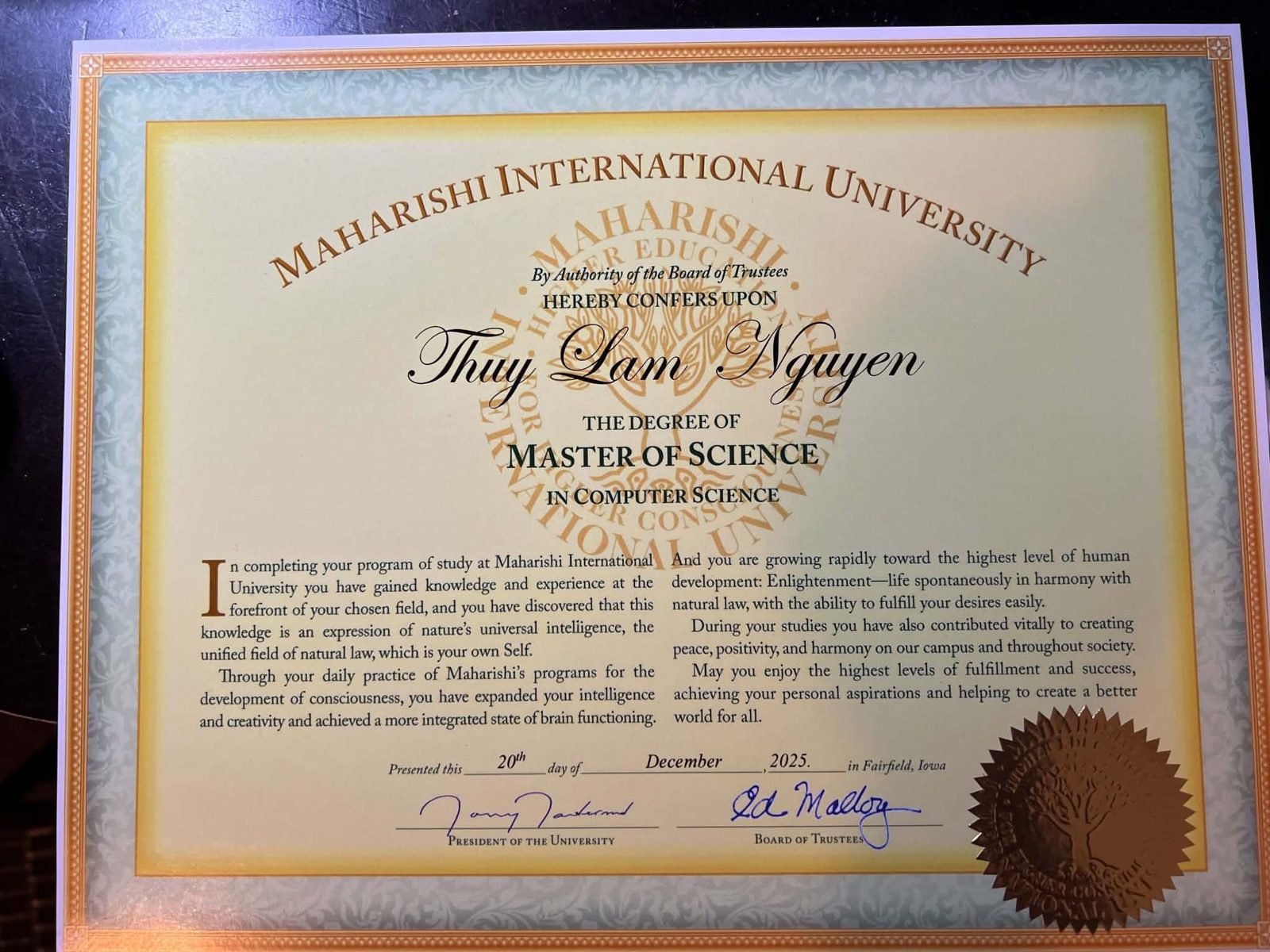
 Add your Master's degree picture
assets/images/master-degree.jpg
Maharishi International University

Hello,
I am LAM NGUYEN, a Senior Full Stack .NET Developer with 10+ years of experience designing, building, and deploying enterprise-scale web, desktop, and cloud-native applications.
I have deep expertise in SOLID principles, Clean Architecture, RESTful API design, and relational/NoSQL database design, with hands-on mastery of the Azure platform — Logic Apps, App Services, Function Apps, Azure Storage, Service Bus, and API Management. I work across the full stack, from Angular/React SPAs and WPF desktop clients to event-driven microservice backends.
I lead technical design, mentor developers, and deliver high-performance systems from concept through production in the Healthcare and Banking domains.
I have improved Healthcare data-processing performance by 40% through database redesign, built payment integrations for a Banking client, and architected a .NET 8 Clean Architecture platform with CQRS, event-driven Azure services, and Terraform-provisioned infrastructure.
Build software that is easy to change: loosely coupled bounded contexts, contract-first APIs, well-designed data models, and automated pipelines that let teams ship to production with confidence.
I keep growing with the .NET and Azure ecosystems so the systems I build stay secure, observable, and ready to scale.
My Name: Lam Nguyen
Title: Senior .NET Full Stack Developer
E-mail: sofianguyenus@gmail.com
Address: Harrisburg, NC
My Phone: (641) 233-9100
My Hobbies: Reading, swimming, chatting
LinkedIn: linkedin.com/in/lam-nguyen-ab48ab297
GitHub: github.com/saobien2020
Enterprise asset lifecycle platform
- Architected backend on .NET 8 Clean Architecture with strict adherence to SOLID principles — interface-segregated application services, dependency inversion via built-in DI, and MediatR CQRS with FluentValidation — covering full asset lifecycle across loosely coupled bounded contexts.
- Designed versioned RESTful APIs contract-first with OpenAPI/Swagger, applying resource modeling, idempotent endpoints, and consistent error contracts; published and secured them behind Azure API Management with policy-based throttling.
- Designed the relational schema in SQL Server (normalized core model, covering indexes, row-level security) and modeled Cosmos DB containers with partition-key strategy for an immutable audit log.
- Built a feature-rich Angular 17 SPA with Signals for reactive state, lazy-loaded modules, role-based UI rendering, and a drag-and-drop report builder with PDF/Excel export and KPI dashboards.
- Engineered full-stack security with JWT Bearer middleware, policy-based RBAC, and PKCE OAuth flow via MSAL against Azure AD B2C.
- Designed event-driven architecture using Azure Service Bus, Azure Function Apps for asynchronous processing, Blob Storage for document handling, Redis distributed cache with keyset pagination, and SignalR real-time updates.
- Provisioned infrastructure with Terraform across dev/staging/prod; authored Azure DevOps YAML pipelines and configured observability via Application Insights, Serilog, and Azure Monitor.
Technologies Used:
.NET 8, ASP.NET Core, C#, Angular 17, Angular Signals, MediatR, FluentValidation, EF Core, Clean Architecture, SOLID, SQL Server, Azure Container Apps, Azure API Management, Azure AD B2C, MSAL, Graph API, Azure Service Bus, Redis, Azure SignalR Service, Cosmos DB, Blob Storage, Azure Functions, Azure Key Vault, Azure Cognitive Search, Azure Front Door, App Insights, Serilog, Docker, Terraform, Azure DevOps Pipelines, xUnit, TypeScript, SignalR, SendGrid
Banking — payment integration & business-critical web applications
- Delivered payment integration solutions and business-critical web applications for a Banking client, applying SOLID principles and design patterns (repository, strategy, decorator) to keep integration adapters replaceable and testable.
- Built and maintained Azure microservices hosted on Azure App Services and Azure Function Apps, communicating via Service Bus topics/subscriptions, with secrets in Key Vault and files in Azure Blob Storage.
- Designed public and internal Web APIs (REST, versioned, Swagger-documented) consumed by Angular/React frontends and third-party payment partners.
- Designed and tuned SQL Server databases for high-volume transaction processing — schema design, index optimization, execution-plan analysis, and stored-procedure refactoring — cutting key report queries' runtime significantly.
- Developed dynamic reporting and analytics modules (SSRS) for management decision-making.
- Authored unit and integration tests; mentored developers and led architecture and design reviews.
Technologies Used:
ASP.NET MVC, Blazor, Entity Framework, Angular, React.js, TypeScript, C#, .NET Core, Web API, Azure App Services, Azure Functions, Azure Service Bus, Blob Storage, Key Vault, Azure DevOps, Microservices, SOLID, SQL Server, SSRS, xUnit, Bootstrap, Kendo, Telerik, Git, Sass, Docker
Enterprise integration workflows on Azure
- Implemented enterprise integration workflows with Azure Logic Apps — orchestrating Dynamics 365, REST connectors, Service Bus queues, and custom Azure Functions into resilient, monitored business processes with retry and error-handling policies.
- Designed integration APIs and exposed them through Azure API Management with subscription keys, rate limiting, and transformation policies; documented all contracts with Swagger/OpenAPI.
- Modeled Cosmos DB collections and Redis caching layers for low-latency reads; designed relational schemas for workflow state and audit data.
- Improved application reliability, monitoring, and deployment processes across cloud-based services.
Technologies Used:
.NET Core, Web API, Angular, Azure Logic Apps, Azure Functions, API Management, Redis, Cosmos DB, Service Bus, Key Vault, App Services, SignalR, Dynamics 365, Docker, xUnit, Moq, CI/CD, Swagger, InRule, FormIO
Healthcare data processing systems
- Improved performance of large-scale Healthcare data processing systems by 40% through database redesign — normalization fixes, targeted indexes, and query rewrites in MySQL.
- Developed dashboards, reporting features, and integrations for business applications following CQRS and dependency-injection (Autofac) patterns aligned with SOLID.
- Implemented background processing and notification services with Hangfire.
Technologies Used:
C#, MVC 5, Entity Framework 6, JavaScript, jQuery, Bootstrap, LINQ, Autofac, Hangfire, MySQL, CQRS, SOLID, Git, SCRUM, ASP.NET Identity
Enterprise desktop & web line-of-business tools
- Built and maintained WPF desktop applications using MVVM, XAML data binding, custom controls, and asynchronous UI patterns for enterprise line-of-business tools.
- Modernized legacy applications and migrated systems to ASP.NET MVC; developed WCF web services, reporting solutions, and enterprise software components.
- Designed database schemas and wrote optimized queries for SQL Server 2005 and PostgreSQL backing both desktop and web clients.
Technologies Used:
C#, ASP.NET, MVC 3, WCF, WPF, MVVM, XAML, jQuery, NHibernate, NUnit, SQL Server 2005, IIS, XML, XSLT, PostgreSQL, TFS, SOA
SOLID (SRP, OCP, LSP, ISP, DIP), DRY, KISS, Separation of Concerns, GoF Design Patterns, Dependency Injection, Domain-Driven Design, Clean Architecture, CQRS, Event-Driven Architecture, Microservices
RESTful API design (resource modeling, versioning, pagination, idempotency, HATEOAS), contract-first design with OpenAPI/Swagger, API security (OAuth 2.0 / PKCE, JWT, RBAC), API gateway patterns with Azure API Management, gRPC, SignalR real-time APIs
Relational schema design & normalization (3NF), indexing strategies, query performance tuning & execution plan analysis, stored procedures, partitioning, NoSQL data modeling (Cosmos DB partition-key design, MongoDB), keyset pagination, migration strategies with EF Core
Logic Apps, App Services, Function Apps (serverless, Durable Functions patterns), Azure Storage (Blob, Queue, Table), Service Bus, API Management, Key Vault, Container Apps, Cosmos DB, Redis Cache, Azure AD B2C, SignalR Service, Cognitive Search, Front Door, Application Insights, Azure Monitor
C#, .NET 8/9, ASP.NET Core, Web API, EF Core, Dapper, MediatR, FluentValidation, LINQ, Hangfire
Angular, React, TypeScript, JavaScript, HTML5, CSS3, Bootstrap, Blazor, WPF (MVVM, XAML, data binding, custom controls)
Docker, Kubernetes, Terraform, Azure DevOps, CI/CD YAML pipelines, Git
SQL Server, PostgreSQL, MySQL, MongoDB, Cosmos DB, Redis · xUnit, NUnit, Moq, Playwright, Integration Testing, TDD
Add your Master's degree pictureassets/images/master-degree.jpg
Maharishi International University
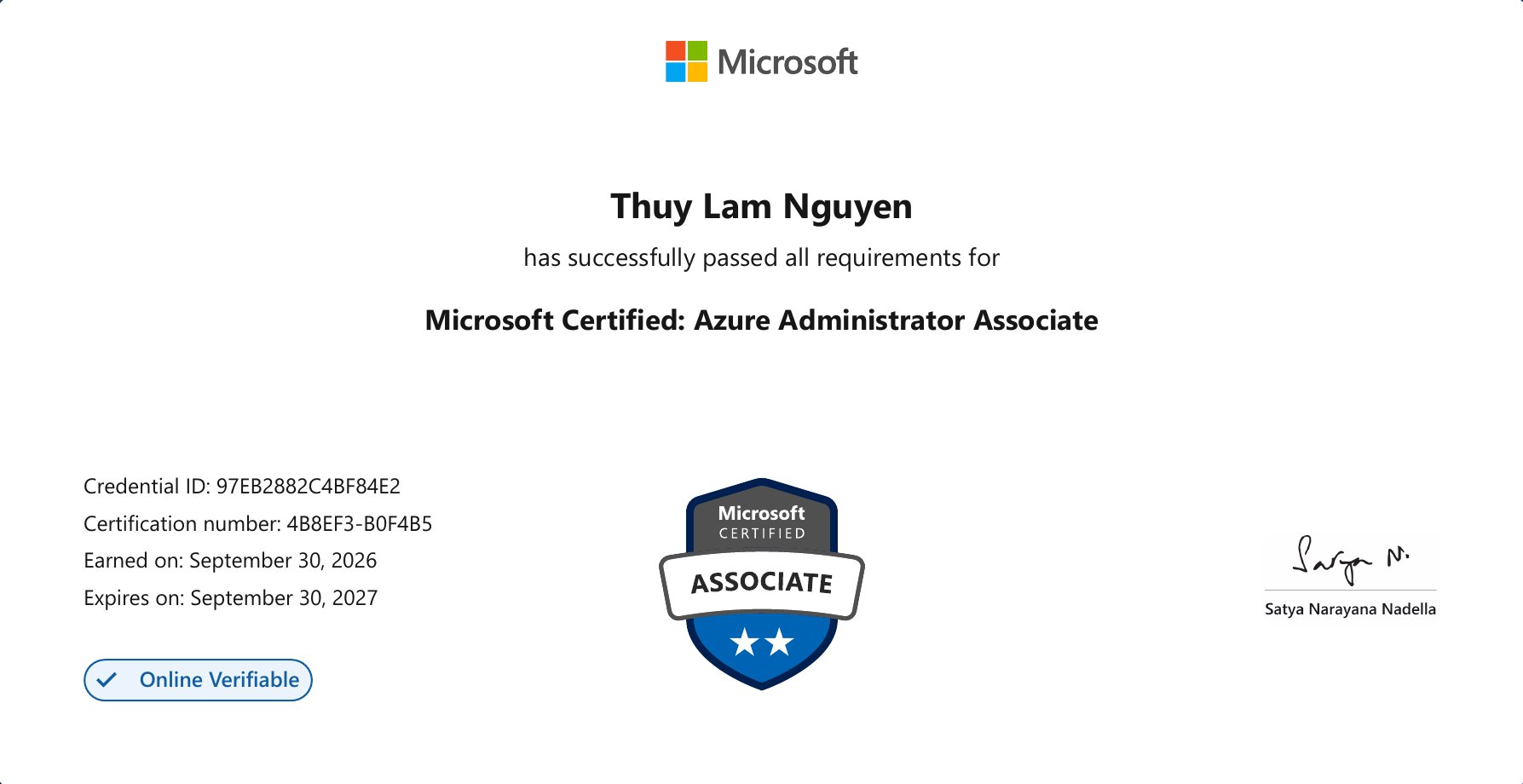 Add certificate picture
• What is it… An AI language model trained on a massive amount of text data that generates natural language responses in a conversational style. (Aka a magic genie)
• Future of it… This tool and others like it will be seamlessly integrated into our computers and smartphones, eventually becoming a full-time personal assistant custom tailored to you.
• Main benefits… Saving time, saving time, saving time. But also, extending into fields outside your expertise, quickly get ideas off the ground, and reiterate much more effectively.
• Main Types of Outputs:
• Synthesizing Info - Summarize large amounts of content in a concise way.
• Content Creation and Copy - Generate brand new content for a specific topic and purpose.
• Learning and Research - Get questions answered for extremely specific needs.
• Coding - Generate code, info on programming concepts and APIs, and debugging.
ChatGPT and Google search are both AI-powered tools, but they differ in several ways:
1. Purpose: Google search is a search engine that helps you find links to information on the web, while ChatGPT is an interactive tool that not only finds you the information you are searching for but can also explain, summarize, and build on it with you.
2. Input: Google search requires a user to type in a query, whereas ChatGPT interacts with users in a conversational or iterative manner, you must work with it to get the desired output such as asking follow up questions. (Even if you do not know what question to ask)
3. Output: Google search returns a list of web pages related to the query, whereas ChatGPT provides a single answer or response. (40% of 1st clicks on google return to search page)
4. Scope: Google search has access to a vast amount of information on the web, while ChatGPT is limited to the information it was trained on. (This will change with time)
In short, Google search is a tool to find information on the web, while ChatGPT is a conversational tool that can help you find the right questions to ask and synthesize large amounts of information for your specific needs.